Apr 8, 2026
How Kadant, Fastway Engineering, and Corvid HPC pushed the limits of Ansys Fluent to model one of industry’s most challenging fluid environments - and validated it against real-world mill data.

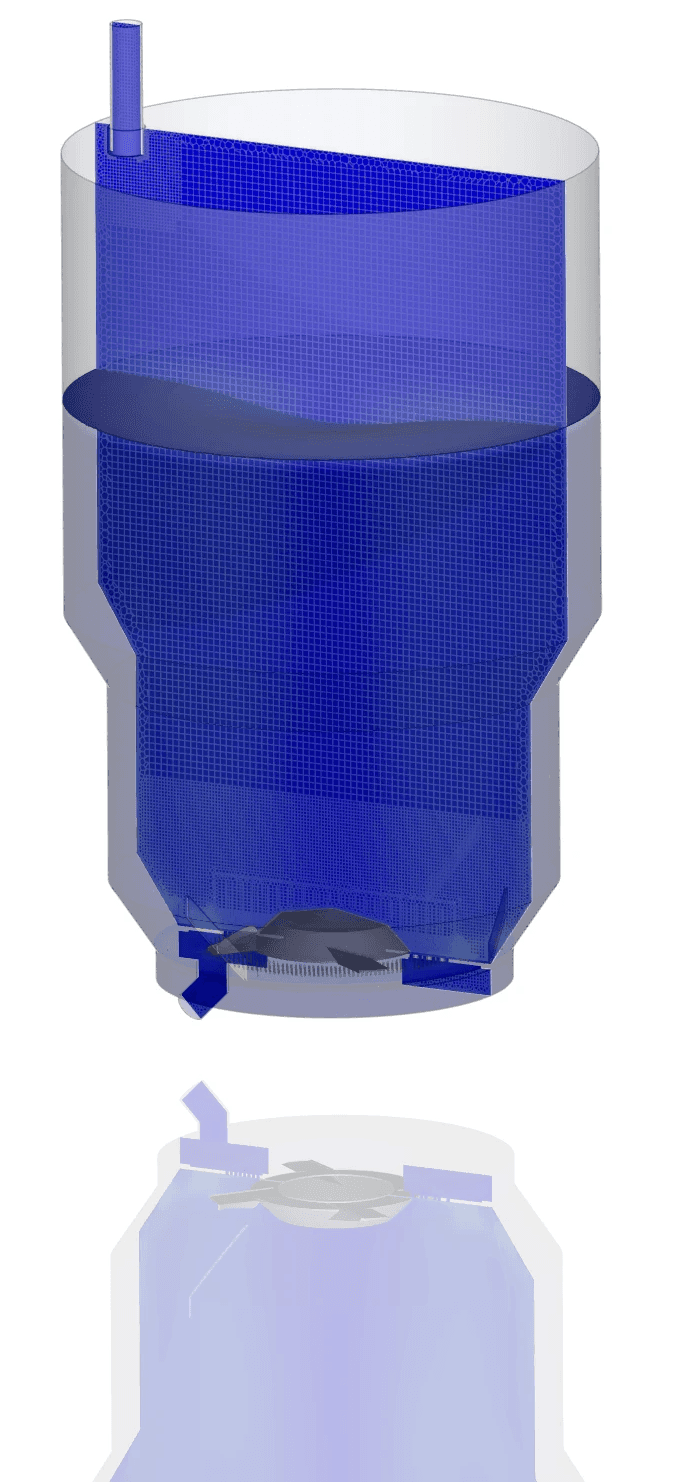
Full-detail CFD model of the Hydrapulper DR - the full 3D geometry modeled in Ansys Fluent with no symmetry assumptions, showing the free surface, rotor, and bedplate detail. The mesh visible through the transparent geometry comprised millions of cells tuned to resolve gap clearances down to 1 mm.
AT A GLANCE
Customer | Kadant Black Clawson (Kadant Fiber Processing) |
Industry | Pulp & Paper / Fiber Processing |
Solution | Ansys Fluent CFD, HPC (Corvid), Elastic Cloud Computing |
Application | Multiphase Transient CFD - Full-Detail Industrial Pulper |
Partners | Fastway Engineering (simulation), Corvid HPC (compute infrastructure) |
Key Result | CFD pressure outputs matched physical mill sensor data; free surface and transient pressure waves accurately captured |
ABOUT KADANT
Kadant Black Clawson, a division of Kadant Inc., is a global leader in highly engineered systems and critical components for the pulp and paper industry. With a heritage spanning more than 150 years, Kadant specializes in the preparation of virgin and recycled paper stock, offering a comprehensive product portfolio that includes pulping, detrashing, cleaning, screening, and reject handling equipment.
Research and development has been a cornerstone of Kadant since its founding. That commitment to continuous improvement and looking harder at every layer of a problem is what drives projects like this one.
THE CHALLENGE
The Hydrapulper DR Pulper is at the heart of the paper recycling and stock preparation process. Inside its tank, a high-speed rotor drives a turbulent slurry of paper, water, and debris through a complex bedplate geometry - breaking down fiber, separating contaminants, and preparing stock for downstream processing. Understanding precisely what happens inside that environment has long been a goal for Kadant’s engineering team.
Kadant had been modeling the pulper with CFD for some time. Earlier work had produced meaningful insights, but with every answer came new questions - and those questions demanded more. The team had reached the limits of their on-board computing infrastructure. What was needed was a truly full-fidelity model: no symmetry shortcuts, no porous media simplifications, no compromises.
The target simulation was one of the most demanding CFD setups in industrial fluid dynamics:
Full cylindrical geometry - no symmetry assumption
Transient solver including rotor motion
Full bedplate detail - no porous media simplification
Free surface modeling using the Volume of Fluid (VOF) method
The geometric extremes alone made this formidable: a tank roughly 3 meters tall, with critical gap clearances down to 1 mm. That aspect ratio - 3000:1 - creates meshing challenges that push the limits of any CFD workflow.
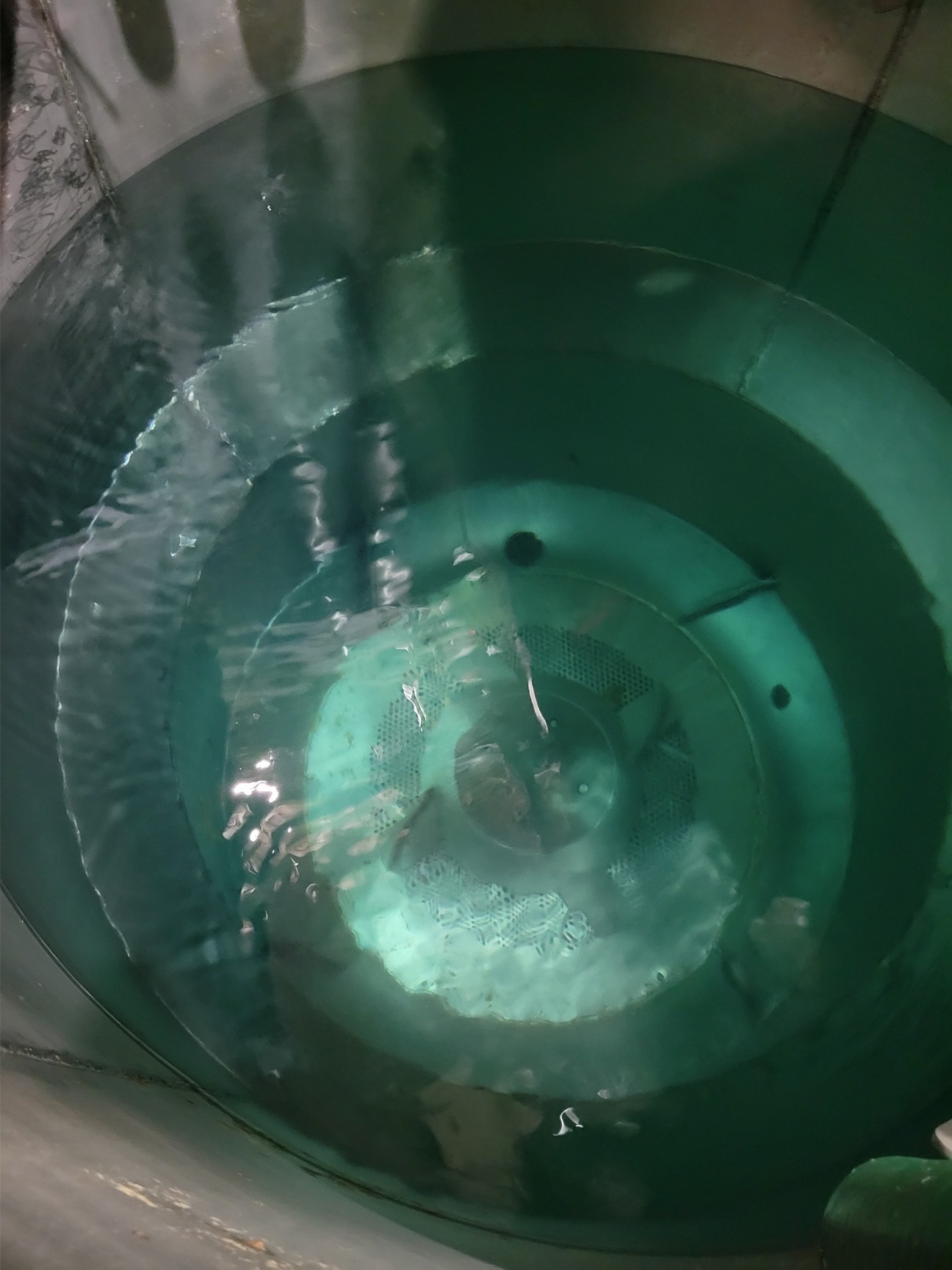
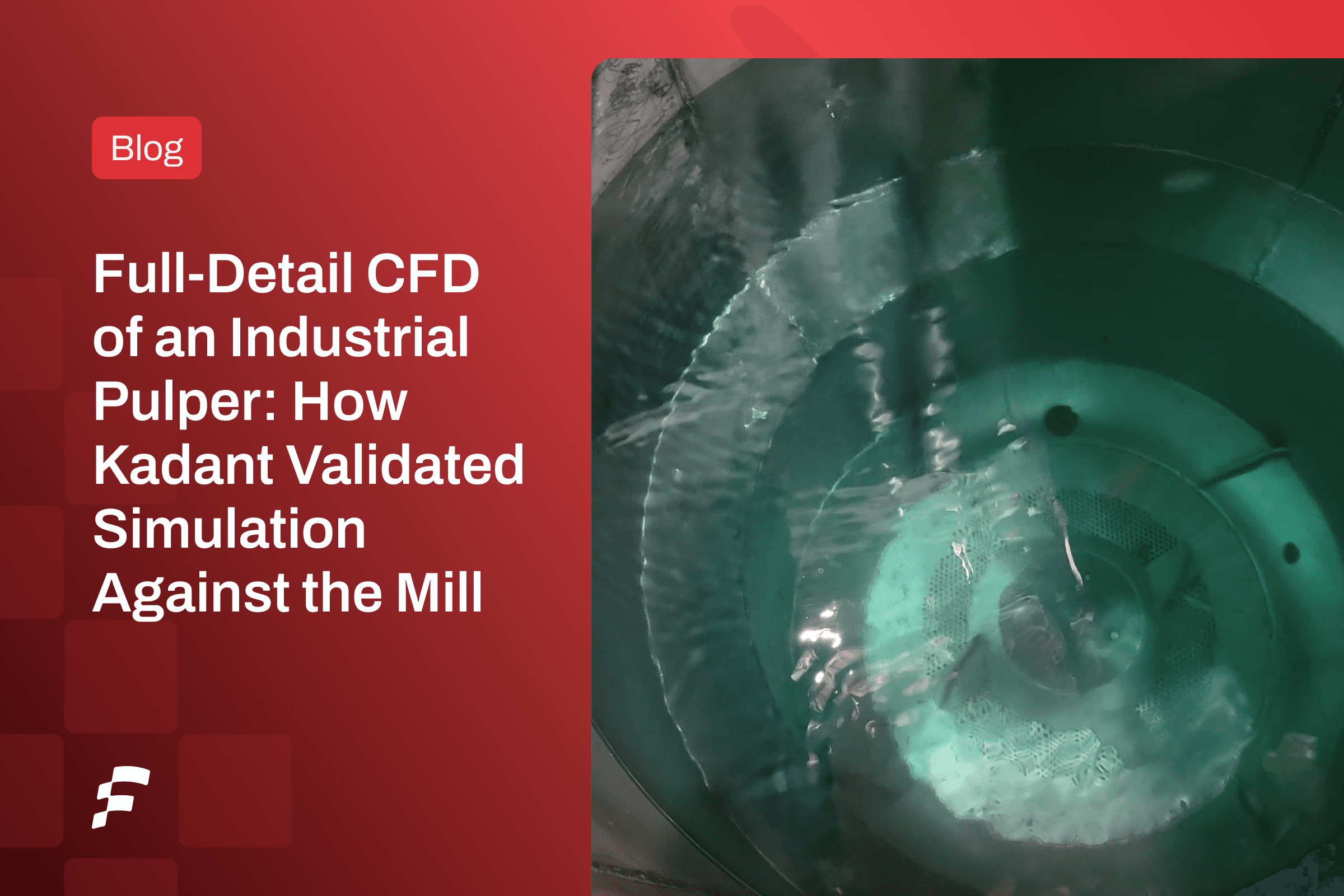
The Hydrapulper DR in operation - the turbulent free surface and vortex behavior driven by the rotor are clearly visible. Capturing this physics accurately in CFD was the central challenge of the project.
THE APPROACH: SIMULATION + REAL-WORLD VALIDATION
What made this project distinctive was not just the complexity of the simulation - it was the deliberate strategy of running the CFD alongside a parallel mill test program. Kadant instrumented an actual pulper in a production environment, embedding diaphragm pressure sensors into the bedplate holes and deploying motion sensors and Ladar to record in-pulper performance data. The goal: cross-confirm simulation results against real-world measurements, and use both data streams to sharpen each other.
Fastway Engineering took responsibility for the simulation setup, bringing deep Ansys Fluent expertise to a problem that required careful decision-making at every stage of the workflow.
SIMULATION SETUP
CAD preparation was handled in Ansys Discovery, enabling geometry clean-up and simplification decisions that preserved physical fidelity while making the model tractable. The meshing workflow used Ansys Fluent’s watertight meshing approach, with carefully tuned mesh controls to resolve the critical gap geometry. The team had to select the right rotor start position, dial in fixed time steps, and monitor the CFL number continuously throughout the solve.
One of the key technical decisions was the choice between implicit and explicit volume fraction formulation for the VOF free surface. After evaluation, the team ultimately hard-coded the time step to prevent divergence - a pragmatic engineering call that kept the simulation stable through a complex transient.
Transient CFD animation: tank filling sequence showing the development of the free surface and the onset of rotor-driven fluid motion. Volume of Fluid (VOF) method - Ansys Fluent. Representative rotor geometry only.
HPC INFRASTRUCTURE VIA CORVID
Simulations of this scale cannot run on workstation-class hardware. Fastway coordinated with Corvid HPC to provision the compute infrastructure required: 320 cores of managed, on-demand HPC power. Corvid handled licensing logistics and HPC environment setup, allowing the simulation team to focus entirely on physics rather than infrastructure. The final solve ran in 18 hours - a timeline that would have been unreachable on conventional hardware.
RESULTS
The simulation delivered across every key objective. Ansys Fluent accurately captured the free surface dynamics and the transient pressure waves at the bedplate - the most physically demanding outputs to resolve in this type of model. Velocity fields, turbulence data, and residence time estimates (useful for inferring mixing behavior) were all obtained with confidence.
The result that mattered most: when the CFD pressure outputs were compared against the physical diaphragm sensors embedded in the bedplate, the data runs aligned closely. In a model this complex (with this many variables) that correlation is not a given. It confirmed that the simulation was capturing real physics, not just a plausible approximation.

Beyond the technical outputs, the project demonstrated something strategically important: that the combination of full-detail CFD, properly resourced HPC, and real-world mill validation can be run as a practical R&D workflow - not just a one-off academic exercise.
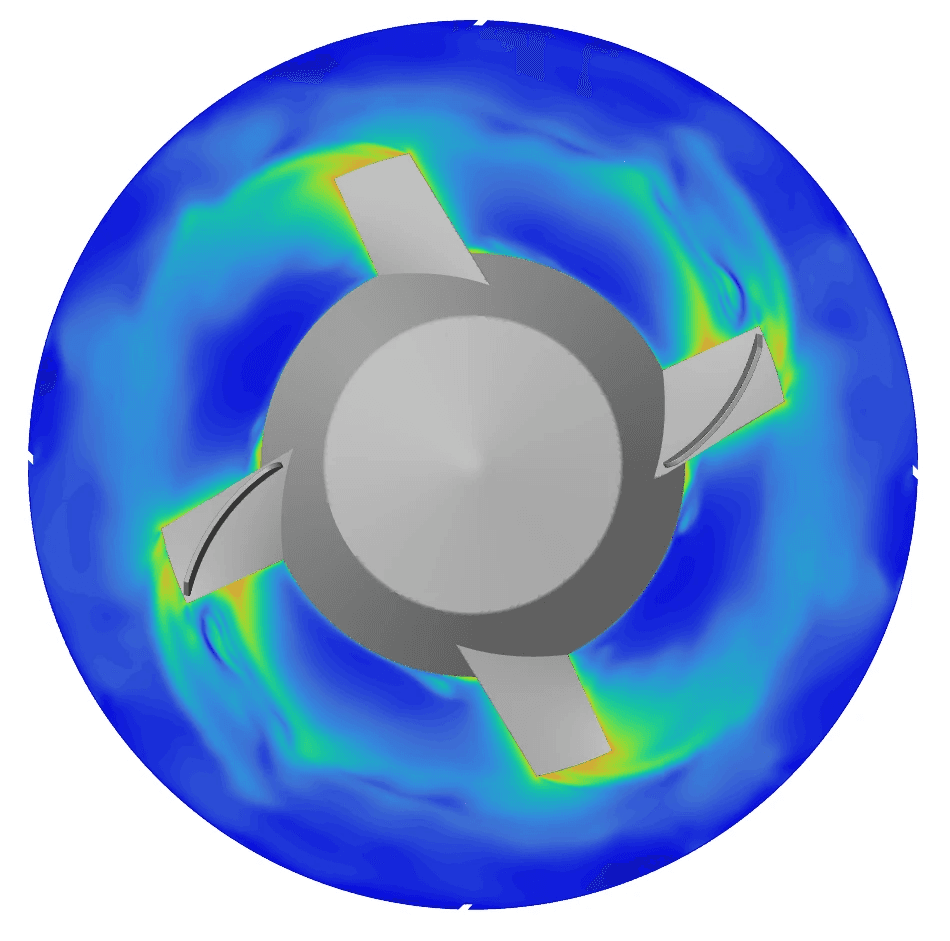
Ansys Fluent velocity field at the rotor plane - top-down view. The simulation resolved the turbulent flow structures generated by each rotor blade, including the high-velocity zones at blade tips and the complex wake patterns propagating outward toward the bedplate.
ENABLING FACTORS
Three capabilities had to come together for this project to succeed:
Ansys Fluent: The solver’s VOF capability, watertight meshing workflow, and transient rotor motion handling were essential to capturing the physics with the required fidelity. Without a solver capable of handling this combination of features simultaneously, the model simply could not be built.
Fastway Engineering: Simulation expertise was the connective tissue of the project. Meshing a 3000:1 aspect-ratio geometry, managing VOF stability, tuning time steps, and coordinating with the HPC partner all required hands-on CFD experience that went well beyond standard software operation. Fastway’s role was to make the hard parts tractable.
Corvid HPC: Elastic, on-demand HPC infrastructure removed the compute ceiling that had previously limited Kadant’s modeling ambitions. Corvid’s managed environment meant the team could scale to 320 cores without procurement delays, infrastructure overhead, or licensing complexity.
LOOKING AHEAD
The full-fidelity pulper model is a foundation, not a finish line. Kadant’s roadmap for this work includes two significant expansions:
Particle physics coupling - the pulper tank contains a multi-material, multi-phase slurry of solid debris and liquid. Adding discrete phase modeling will bring the simulation even closer to the real operating environment.
Design optimization - with a validated baseline model in hand, the team can now explore innovative new blade shapes and bedplate patterns to optimize throughput and minimize downtime without the cost of physical prototyping.
For Kadant, this project is consistent with a 153-year commitment to always moving forward. Working up into the greater speed and accuracy of high-powered computing platforms only proves the value of this strategy. R&D has always been how Kadant has lasted this long, always looking harder, peeling back the layers.
ABOUT THE PARTNERS
Fastway Engineering is a Chicago-based Ansys partner specializing in simulation software, services, and training. Fastway bridges academia and industry by deploying predictive engineering workflows across structures, fluids, electronics, HPC, and optics - helping product development teams solve complex design problems faster.
Corvid HPC provides managed, on-demand high-performance computing infrastructure purpose-built for engineering simulation workloads. Corvid’s elastic compute platforms give simulation teams the power to tackle problems that exceed on-premise hardware capacity.
Kadant Inc. is a global supplier of high-value industrial process equipment and critical components. Kadant’s products and services are used in process industries including papermaking, packaging, nonwovens, recycling, and other industrial processing applications.
Ready to push your simulation further?