Apr 22, 2026
When our CEO and Managing Director, James Shaw was starting out, he spent a good part of his early career walking into rooms full of experienced engineers and trying to convince them that simulation was worth their time. Most of them didn't want to hear it. Twenty-five years later, we're watching the same conversation play out, just with AI in the seat that simulation once occupied.
In a recent podcast episode, James sat down with Jousef Murad to talk through two of the most consequential shifts reshaping engineering right now: agentic AI workflows and physics-informed neural networks (PINNs). At Fastway, these are topics showing up in the conversations we have with our customers every single day and in this blog post, we pull out the most important ideas in this topic.
Agentic Engineering & PINNs With James Shaw. Watch the full episode on YouTube.
Where Agentic AI Is Actually Showing Up in Simulation Workflows
If you've been waiting for AI to arrive in engineering, you may have missed its first moves. As James explains in the episode, the initial deployment of agentic AI in simulation workflows isn't replacing analysts, but rather replacing the questions they were already asking their colleagues down the hall.
"Every single time I have to guess. Every single time I can't find a button, every single time I think to myself, well, this doesn't look right, that's what the agent handles."
These co-pilot tools, embedded directly inside FEA and CFD platforms, are handling the low-hanging fruit: technical support queries, navigation, and sanity checks. It's incremental, but it's real, and it's accelerating. The more important question is what comes next. Because the tech support layer is just step one. The second wave is agents that help build the model itself, and the third, which is already beginning in pockets of industry, is AI sitting in the middle of the simulation process. That's where it starts to get genuinely transformative, and it’s where PINNs enter the picture.
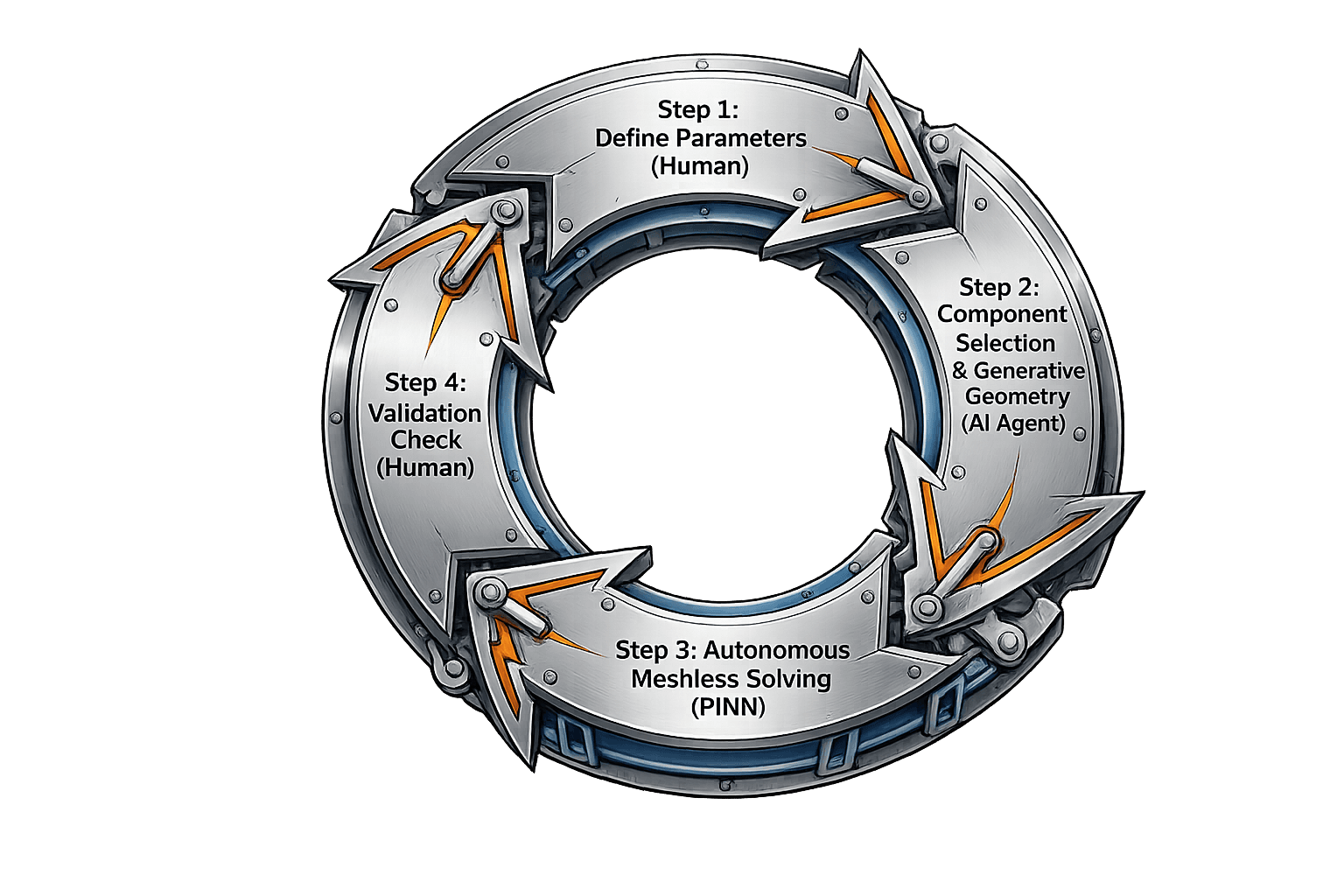
The human-in-the-loop is part of the four steps in a CAD workflow.
CFD Is the Leading Edge for Physics-Informed Neural Networks
Physics-informed neural networks (PINNs) are neural networks grounded in the physics of the system (conservation of mass, momentum, energy) rather than purely statistical patterns and data. The loss function fed back into the network is anchored in the same governing equations that underpin traditional solvers, which is what separates them from a black-box prediction model. You can draw a direct parallel to how CFD engineers already check residuals to verify convergence: the PINN is doing something analogous, just with a learned model rather than a discretized mesh.
Furthermore, the reason CFD is leading the way is the turbulence closure problem. It's one of the oldest and most stubborn challenges in computational fluid dynamics. Models like k-omega approximate turbulent behaviour, but approximation is exactly what a well-trained neural network can improve on if given enough quality data to learn from.
"We've got the closure problem with turbulence. And that's why I think we're seeing the number one application of PINNs right now in CFD, it's going to help accelerate and minimize errors in the closure problem of turbulence."
For applications like external aerodynamics, where drag and downforce predictions depend directly on getting shear forces right, the combination of traditional CFD for training data and a PINN for rapid what-if analysis is already a viable workflow. Electronics cooling is arguably already there in terms of maturity. For hypersonic flows and multiphase change it’s going to take longer, and rightly so.
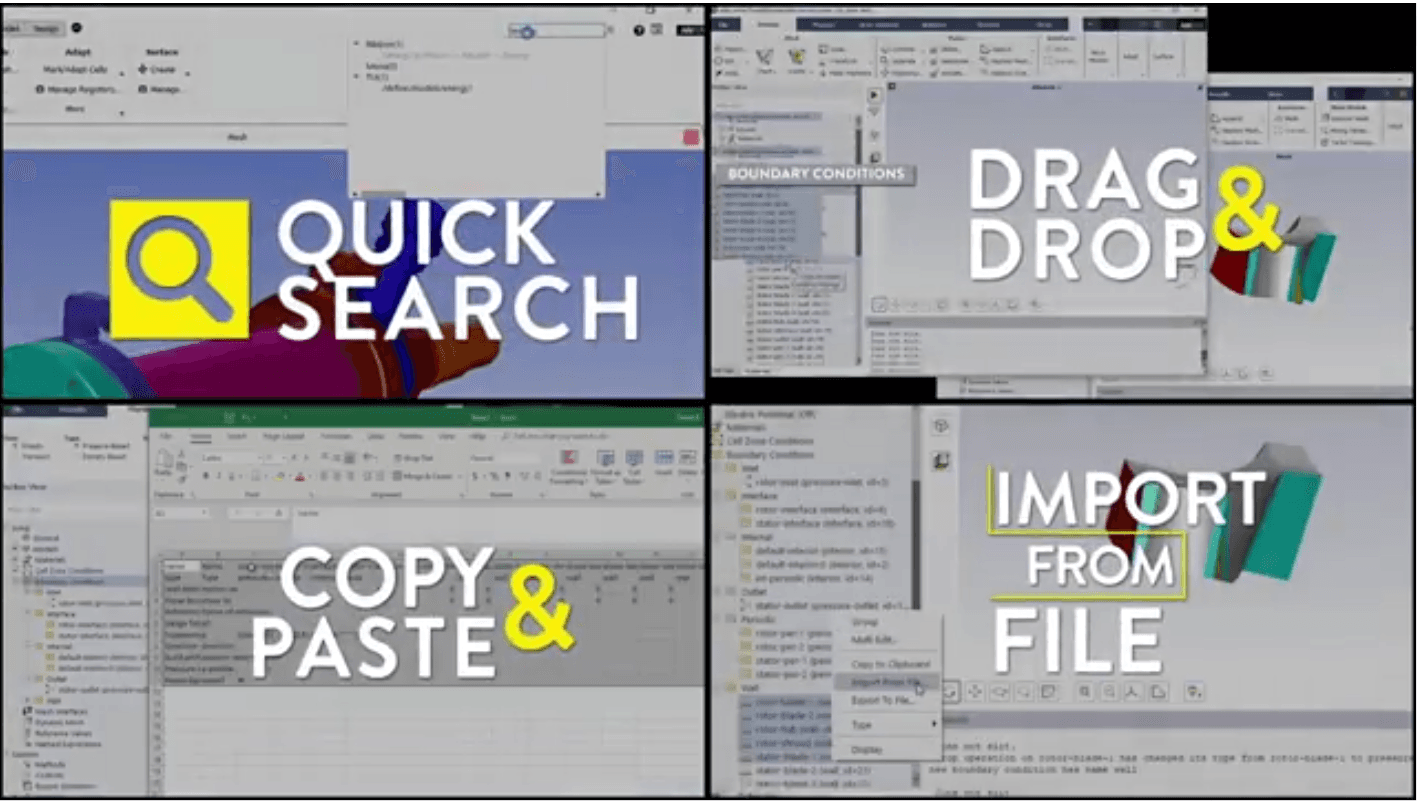
Ansys Fluent is a powerful computational fluid dynamics (CFD) software used for simulating fluid flow, heat transfer, and other related phenomena in engineering and scientific applications. Learn more.
The Senior-Junior Inversion Crisis Nobody Is Talking About
Here's where the conversation takes a turn that goes well beyond software features. There’s what can be referred to as a “senior-junior inversion crisis”, and it's a problem that P&L-focused decisions are already creating.
The logic goes like this: if companies replace entry-level and intern-level engineering roles with AI because it's the obvious first efficiency gain, they are quietly destroying the pipeline that produces their next generation of senior engineers. Five years from now, when those senior engineers retire, there will be nobody in the middle with the hands-on experience to replace them.
What happens to that company that doesn't have people with five years' experience? They're costing because what they didn't do is backfill.
At Fastway, we’ve been running FEA and CFD training courses for 15 years, and we’ve seen this pattern before, not with AI, but with simulation itself. The smartest companies were the ones that brought senior and junior engineers into training rooms together, not to teach the seniors to run software, but to make sure they could speak the same language as the people who were. Mentorship programs, knowledge transfer, cross-generational engineering teams, these aren't soft HR concepts, but structural competitive advantages.
The parallel to post-COVID talent gaps is pointed and worth sitting with. Entire industries discovered what happens when you thin out the middle of an organization and then need it back in a hurry. Engineering is heading toward the same reckoning if companies automate without thinking generationally.
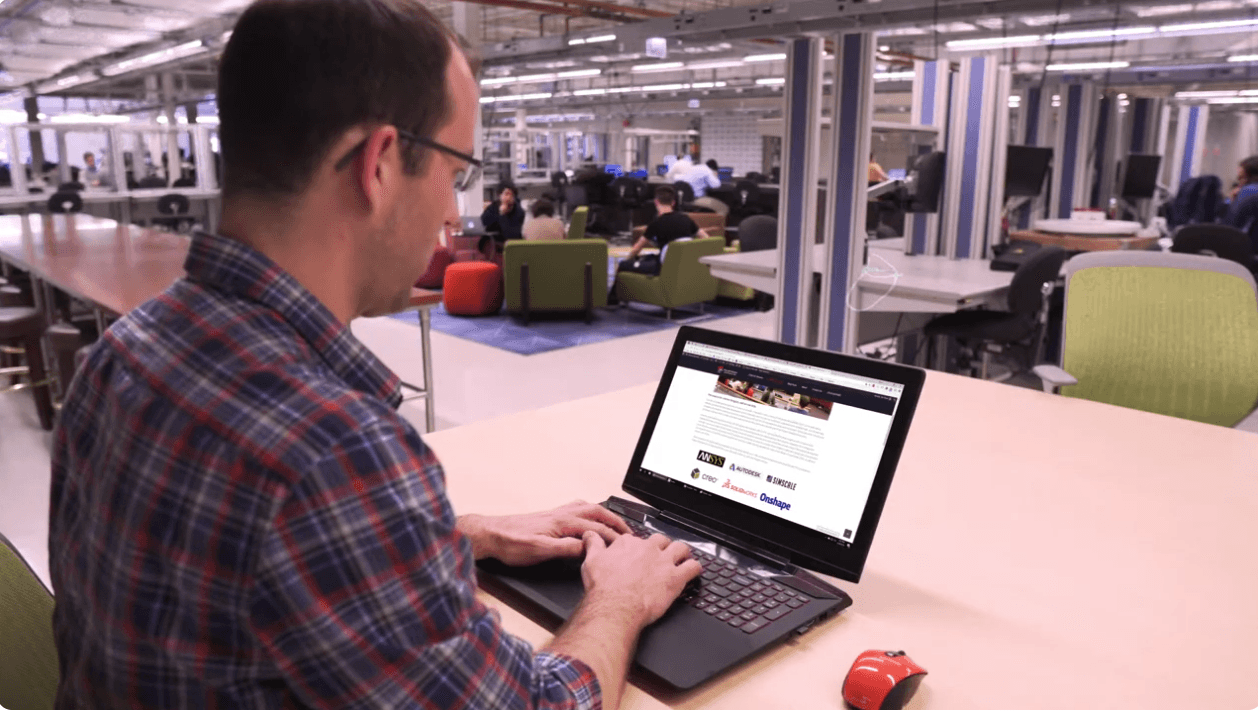
Good engineering demands hands-on learning. Our FEA and CFD training courses are built to match that standard. Discover our classes here.
What the Agentic Engineer Actually Looks Like In 2026
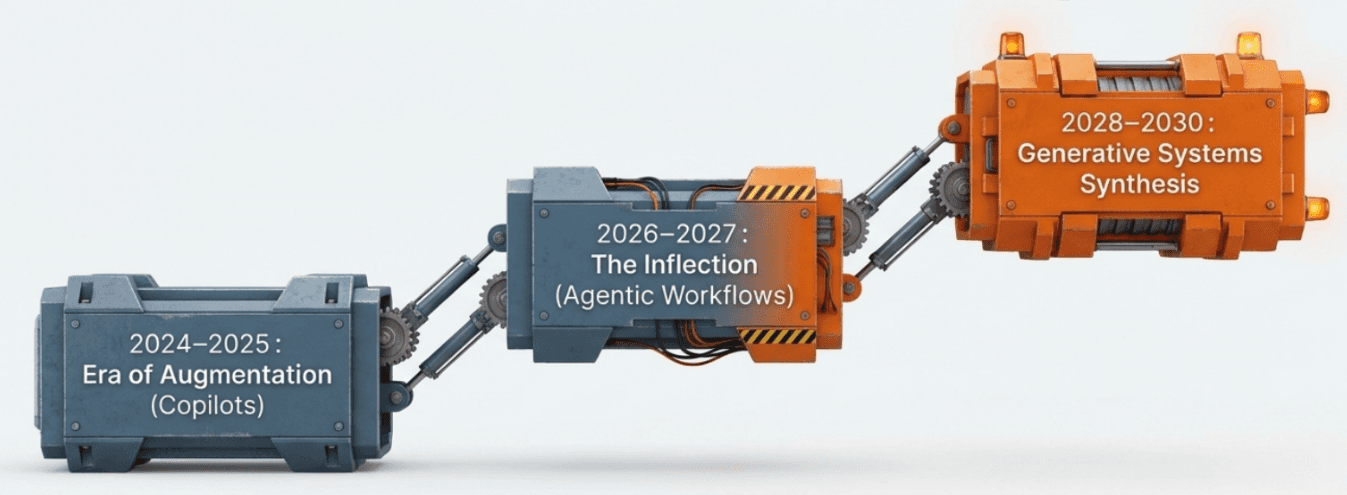
Reaching the era of pure agentic engineering.
So, what's the practical upshot for a simulation engineer working today? Consider the analogy of CNC machines on a factory floor. Twenty years ago, you needed three people per machine, one to load, one to program and monitor, one to unload. Automation didn't eliminate the workforce, but it did restructure it. Now one person manages five machines.
The same shift is coming for simulation. One analyst manages five, six, eight simulations simultaneously, across multiple physics, at various stages of pre-processing, solving, and post-processing, because AI is handling the repetitive scaffolding at each stage. The analyst's role shifts from doing the setup to overseeing the quality of what the agents produce.
The further horizon is the large physics model, essentially, the physics equivalent of a large language model. Where LLMs were trained on language data scraped from the web, a large physics model would be trained on validated simulation data: FEA results, CFD solutions, multiphysics outputs. The benchmarks for this category are being written right now. It’s estimated that the physics AI space is two to five years behind where GPT-class models are today, which means the window to build expertise and positioning in this space is open, but not indefinitely.
For engineers wondering what to do with that information: first principles don't go away. You cannot orchestrate a simulation workflow you don't understand. The T-shaped engineer, deep in one discipline and broad enough to work across the stack, is the profile that compounds value the fastest as these tools mature.
______________________________________________________________________________
Want to talk about what agentic simulation workflows could look like for your team?
We work with engineering teams across industries to build simulation capability that actually delivers.